L-Citrulline Vs L-Arginine: Why One Absorbs Better Than The Other
L-Citrulline and L-Arginine both connect to nitric oxide production, but the body handles them differently — and that difference affects how much actually reaches your bloodstream.
Understanding this explains why some circulation supplements have shifted toward citrulline over arginine in recent years, and what it means if a label lists both.
The shared destination: nitric oxide
Both amino acids are precursors to nitric oxide, a signalling molecule that relaxes blood vessel walls and supports healthy circulation. In principle, more available substrate supports more nitric oxide production.
Where L-Arginine runs into trouble
When you take L-Arginine orally, a meaningful portion is broken down by an enzyme called arginase in the intestine and liver before it ever reaches general circulation — a process called first-pass metabolism. This means a significant share of an oral arginine dose never gets the chance to become nitric oxide at all.
Why L-Citrulline takes the scenic route, successfully
L-Citrulline is absorbed in the small intestine and converted into L-Arginine primarily in the kidneys — a pathway that largely bypasses the liver's first-pass breakdown. The practical result is that oral L-Citrulline often raises blood arginine levels more effectively than taking arginine directly, despite citrulline itself not being the final active molecule.
This is well summarised on WebMD's overview of L-Citrulline, and it is why citrulline has become the more commonly favoured ingredient in newer circulation and performance formulas.
Why some formulas still include both
Including both is not necessarily redundant — L-Arginine may still contribute directly in the portion that survives first-pass metabolism, and some formulators consider the combination a belt-and-braces approach. It is a reasonable inclusion; it does not mean twice the effect compared with citrulline alone.
Applying this to IronPulseX
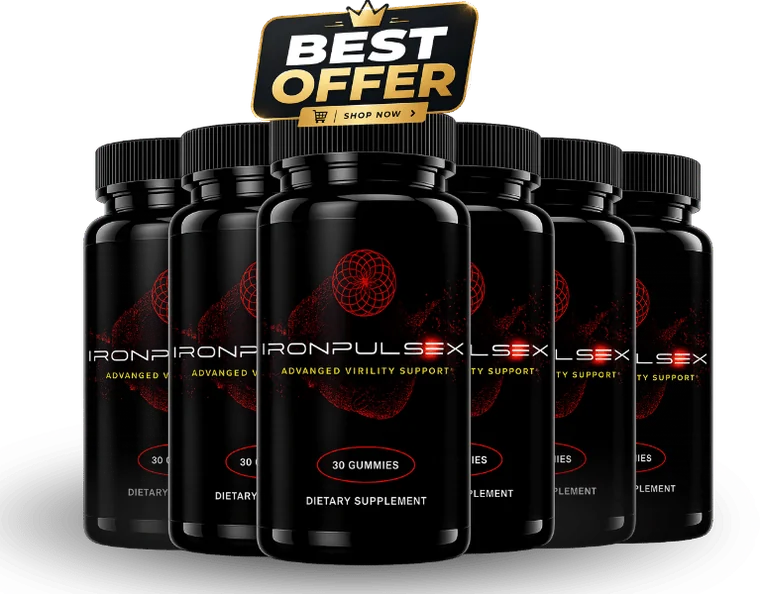
IronPulseX includes both L-Citrulline and L-Arginine, which reflects an understanding of this pathway. Because both sit inside an undisclosed proprietary blend alongside Beet Root Extract and Panax Ginseng, there is no way to confirm whether either is present anywhere close to the 3 to 6 gram range shown effective in research. See our piece on reading a proprietary blend for how to think about that gap.